Blog → How to Get a Table at a Fully Booked Restaurant
How to Get a Table at a Fully Booked Restaurant
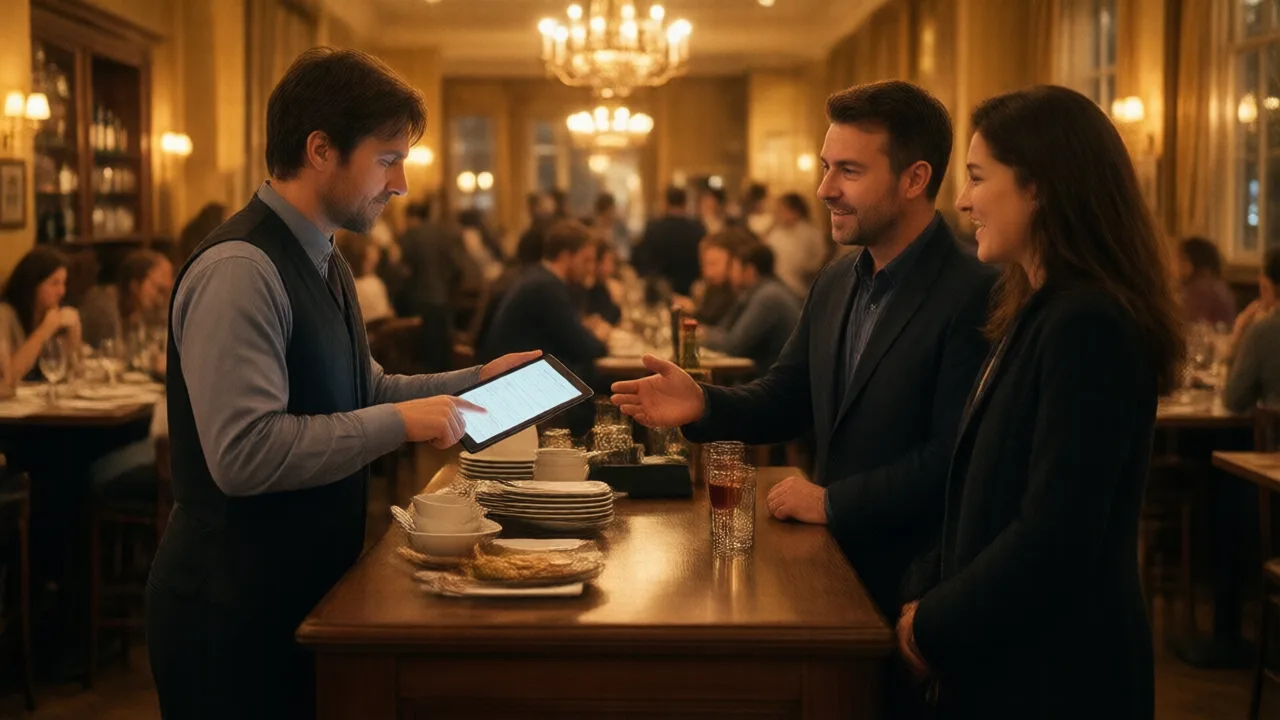
The booking page says no availability. Not this Friday, not next Friday, not the Tuesday you would grudgingly accept. You refresh anyway, which changes nothing, and the little calendar keeps showing grey.
Meanwhile the occasion is not moving. The birthday is on the 14th whether or not a table exists, the out-of-town friend lands Thursday, and you have already named the restaurant out loud to four people. So the search widens into the bad phase: the resale listings asking $180 for a two-top, the group chat suggesting you "just try walking in," the growing suspicion that everyone else knows something you do not.
They mostly do, and it is not a secret handshake. It is a set of timing rules about how restaurant inventory moves. Booked-solid rooms release seats constantly — they just release them into windows that nobody is watching. Here is where the seats actually are.
Why "Fully Booked" Almost Never Means Full
Start with the arithmetic that runs behind the host stand. A restaurant with 70 seats does not sell 70 seats. It sells a book — a plan for how bodies flow through those seats across four hours — and that plan is built with deliberate slack, because the alternative is a dining room that collapses the moment one table lingers.
Three sources of slack matter to you:
- Withheld inventory. Restaurants commonly keep 10–20% of seats off the booking platform: bar tops, counter stools, one or two tables held for regulars, walk-in capacity, and the awkward two-top nobody requests. None of it appears when you check online.
- Predictable attrition. No-show and late-cancel rates run roughly 5–15% at popular restaurants without a deposit policy. On a 120-cover night that is six to eighteen seats that will not be used by the person who reserved them.
- Deadline-driven churn. Cancellation fees create a cliff. When the penalty starts at 48 hours, a measurable share of hesitant bookers release their table in the hour before it kicks in. That is not a rumor; it is what a fee is designed to do.
Restaurants track all of this deliberately. The operational side of the problem — overbooking ratios, deposit thresholds, waitlist management — is covered well in this guide to how restaurants manage their reservation book. Read it from the diner's chair and it functions as a map of where the gaps are.
Play 1: Work the 48-Hour Cliff
This is the single highest-yield tactic and it costs nothing.
Find the restaurant's cancellation policy — it is on the booking page, usually stated as a fee of $25 to $75 per person inside 24 or 48 hours. Now set an alarm for exactly that many hours before the seating you want. Want 7:30 p.m. Friday with a 48-hour policy? Check at 7:30 p.m. Wednesday, then again fifteen minutes later.
Why the precision matters: most platforms process cancellations in real time, and human beings cancel at round-numbered moments, not randomly. The seat you want is released by someone who set their own reminder for the same deadline.
Do the same thing on the day itself between 3 p.m. and 5 p.m. That is when many restaurants run confirmation calls and texts. Every unanswered confirmation eventually becomes a released table, and those releases cluster in the late afternoon.
Play 2: Call at 2:30 in the Afternoon
Almost nobody calls restaurants anymore, which is precisely why calling works. Between the end of lunch service and the start of dinner prep, someone competent is sitting near the phone with the book open.
How to make the call count:
- Ask for the reservations manager or host by role, not by "whoever's there." You want the person with permission to move things.
- Give the flexible version first: "We're two people, any night this week, any time between 5 and 9:30, happy at the bar." Flexibility is the currency here.
- Ask what they can do rather than whether they have anything. "Do you have Friday at 8?" gets a no. "What could you do for two of us this week?" gets the withheld inventory.
- Mention the occasion only if it is real. Anniversary and birthday notes get logged; invented ones get spotted and remembered.
- Leave a number for the cancellation list before you hang up, even if they found you something.
One more thing worth knowing: a growing number of restaurants now answer that phone with an AI system that books, waitlists and texts you back without a human touching it, which is why calls at odd hours suddenly work. If you are curious how those systems handle the book, here is how AI answering and reservation systems work behind the phone line. From the caller's side, treat it like a person: state party size, date range, and flexibility in one breath.
Play 3: Take the Bad Time on Purpose
The seats nobody wants are the seats you can have, and the food is identical.
| Slot | Availability | Trade-off |
|---|---|---|
| 5:00–5:45 p.m. | Very high | Room feels empty early; service is at its sharpest |
| 6:00–6:45 p.m. | Moderate | Often a 90-minute table limit before the 8 p.m. turn |
| 7:00–8:30 p.m. | Near zero | The slot everyone is fighting for |
| 9:00–9:45 p.m. | High | Kitchen may be out of one or two specials |
| Mon–Wed any time | High | Occasionally a smaller crew or reduced menu |
The 5:15 seating deserves particular affection. The kitchen has just finished prep, the pans are clean, nobody is behind, and the servers have not yet absorbed three hours of pressure. Many industry people book exactly this slot on purpose. If the concern is that dinner at 5:15 feels early, treat it as the first half of the evening rather than the whole of it — and if the concern is the opposite, our guide to where to eat well late at night covers the 9 p.m.-and-after end of the same strategy.
Play 4: Shrink the Party
Party size is the most underrated lever on the whole booking page. A restaurant's floor plan is mostly two-tops and four-tops; a six-top requires combining tables, which locks up a corner of the room for two and a half hours.
Practical consequences:
- A party of two can be seated in roughly three times as many configurations as a party of six.
- Two separate two-top reservations, twenty minutes apart, will frequently be merged by a friendly host once you are all standing there — ask at the host stand, never assume.
- Parties of five are the worst number in restaurants. Six is often easier to book than five, because six matches a standard table combination.
- If the group cannot shrink, book earlier and accept the earliest slot. Large parties are placed first when the book is built.
For groups that do end up splitting across tables, settle the money question before anyone orders — our group dining and bill-splitting guide exists precisely because two tables and one check is where good nights go sideways.
Play 5: Sit at the Bar, on Purpose
At most restaurants the bar serves the full menu, is first-come-first-served, and is invisible to the online booking system. That combination makes it the reliable back door.
Arrive 20 minutes before the doors open on a weeknight and you will very often be seated immediately. Arrive at 6:45 and you will wait 25 minutes for a stool, which is still shorter than the three weeks the calendar quoted you. Counter seats in front of an open kitchen are the upgrade version of this: identical food, better view, and frequently a cook who will explain what you are eating.
Play 6: Use the Waitlist Like It Is Real
Digital waitlists are not consolation prizes. On a busy Saturday a well-run waitlist turns over constantly, and the person who answers the text within 90 seconds gets seated.
- Join every list you can — multiple restaurants at once is entirely normal and no one is tracking your loyalty.
- Be physically within ten minutes of the door before you join. Notifications typically expire in 5 to 15 minutes.
- Say yes to the first offer. Declining once usually drops you to the bottom of the queue.
- Reply to confirm even if you are unsure — you can cancel a confirmed seat, but you cannot recover an expired notification.
Play 7: Learn the Release Schedule
For the hardest rooms, availability is not a lottery, it is a clock. Booking windows open on a rolling schedule — 30 or 60 days out, usually at 9 or 10 a.m. local time. Ticketed restaurants often release an entire month at once on the first of the preceding month.
The routine that works: find the rule on the restaurant's own site, put the release moment in your calendar with a five-minute warning, be logged in with a card saved before it opens, and have your date, time and party size chosen in advance. The whole booking should take eleven seconds. Browsing at 10:00:30 means you are already too late.
Play 8: Go When the City Is Not Competing
Demand is seasonal in ways that are easy to exploit. The first two weeks of January, the stretch between the Fourth of July and mid-August, and any week with genuinely miserable weather all produce noticeably softer books. Restaurant Week is the reverse — enormous demand, but at a fixed price that makes the trade worth it if you plan around it, as our guide to getting real value out of Restaurant Week lays out.
Also worth noting: the week a restaurant wins a major award is the worst possible week to try, and the three months after the coverage fades is the best.
Play 9: Become Slightly Known
This is the slow play and it is the one that actually ends the problem. Restaurants keep notes. Book the quiet Tuesday, show up on time, order generously, tip well, thank the host by name on the way out, and do it three times. On the fourth call you are not a stranger asking for a favor; you are a name in the system with a positive note attached.
Booking direct rather than through a marketplace helps here too, because the restaurant sees your history rather than a platform's. The same logic behind ordering directly from restaurants instead of through third parties applies to reservations: fewer intermediaries, better relationship, and the restaurant keeps more of the money you spend.
What Not to Do
- Do not buy a resold reservation from an anonymous marketplace. Prices run $40 to $250 over the meal, and restaurants increasingly cancel bookings they identify as resold. You lose the table and the fee.
- Do not book under three different names to hedge. Platforms flag it, restaurants blacklist it, and it is the behavior that caused deposits to become standard in the first place.
- Do not no-show. Cancel, even at the last minute. A one-minute cancellation gives a table to someone doing exactly what you were doing an hour ago.
- Do not lie about an anniversary. It is logged, and the follow-up question is always more specific than you expect.
Find the table you can actually get tonight
KwickMenu lists real menus from local restaurants and lets you order or book directly with the kitchen — useful when the famous room is booked and you want somewhere genuinely good, right now.
Explore Restaurants on KwickMenuFrequently Asked Questions
What time of day do cancellations actually appear?
Two windows dominate. The first is exactly 48 hours before service, when cancellation fees begin and hesitant bookers release seats; on most platforms this happens on the hour, so 7 p.m. two days out is a live window for a 7 p.m. Thursday table. The second is between 3 p.m. and 5 p.m. on the day itself, when the restaurant confirms the book and no-shows cancel. Checking at both times beats checking ten random times.
Does calling the restaurant directly still work?
Yes, and it works better than it did five years ago because so few people do it. Restaurants hold back tables that never appear online: bar seats, a chef's counter, the two-top by the service station, and a hold for regulars that gets released mid-afternoon. Call between 2:30 and 4:30 p.m. when the phone is quiet, ask for the host or reservations manager by role, and ask what they can do rather than whether they have anything.
Is it worth paying a third party for a reservation?
Rarely. Resale listings for hot tables commonly run 40 to 250 dollars on top of the meal, and many restaurants now cancel reservations they identify as resold, leaving you with neither the table nor a refund. Legitimate paid access exists through hotel concierge services and some credit card dining programs, which negotiate held inventory directly with the restaurant. That is a different product from an anonymous marketplace listing.
Will showing up as a walk-in actually get me seated?
Often, if you arrive at the right time and are flexible. Most full-service restaurants keep 10 to 20 percent of seats for walk-ins, concentrated at the bar and at counters. Arriving at 5:15 p.m. or after 9 p.m., with a party of two, and accepting any seat in the room gives you the best odds. Ask the host how long the wait is, leave a mobile number, then wait nearby rather than crowding the entrance.
How far ahead should I book a hard-to-get restaurant?
Learn the release rule rather than guessing. Most reservation platforms open a rolling window of 30 or 60 days at a fixed local time, frequently 9 or 10 a.m. Ticketed restaurants release a whole month at once, often on the first of the preceding month. Put the release moment in your calendar with a five-minute reminder, be logged in with a saved card before it opens, and book the date you want rather than browsing.
Written by DafaMenu Editorial Team · Published July 26, 2026