Blog → Seasonal Menu Dining Guide
Seasonal Menu Dining Guide: How to Eat With the Seasons and Get the Best of Any Restaurant in 2026
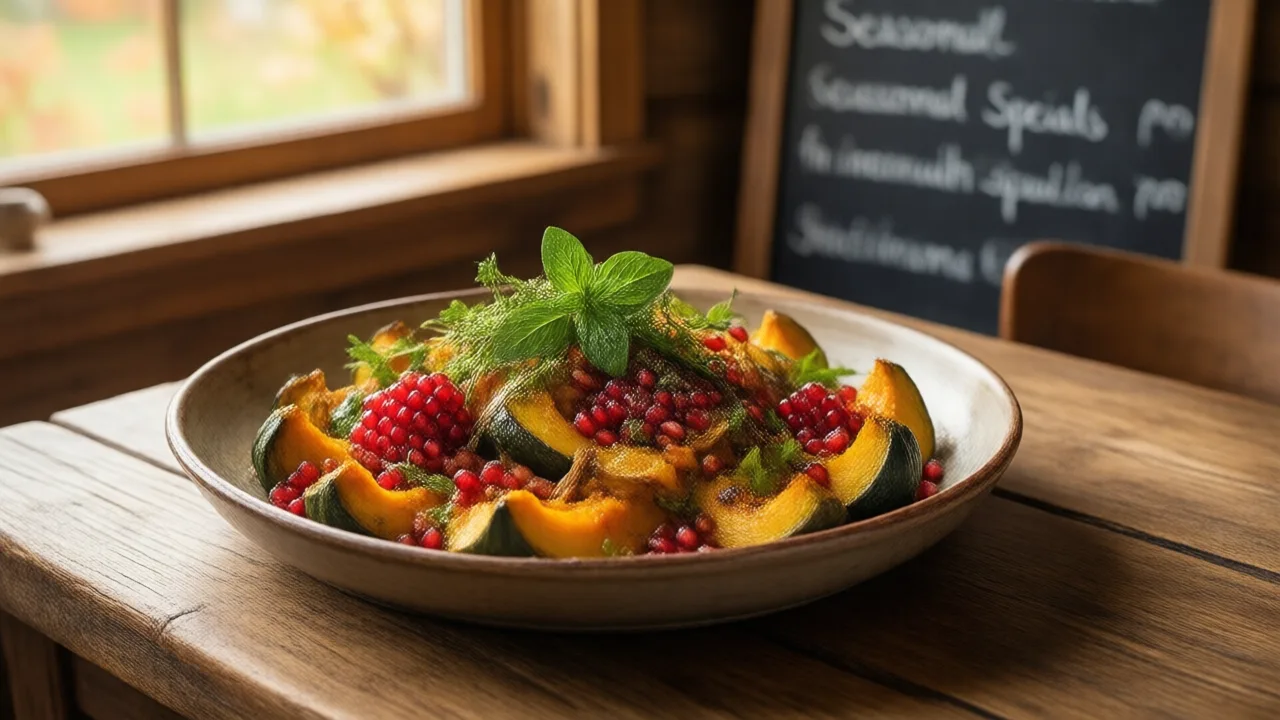
You open the menu, scan past the same grilled chicken and Caesar salad you could get anywhere, and order it anyway. Two tables over, someone is eating a plate of blistered late-summer tomatoes with fresh burrata that the kitchen will not be able to make in three weeks — and it cost them a dollar less than your chicken. They ordered with the season. You ordered out of habit.
Here is what most diners never realize: the single biggest lever on how good your restaurant meal tastes is not the restaurant's star rating or its price tier. It is whether you ordered something at the peak of its season. A tomato in August and a tomato in February are barely the same vegetable. Asparagus in April is a completely different food than the woody, shipped-from-across-the-world spears you get in October. The kitchen can only be as good as its ingredients on any given day.
And yet "seasonal" has become one of the most abused words in restaurant marketing — slapped on menus that never change and dishes available identically all year. So let's cut through it. This guide explains why eating seasonally genuinely gets you a better, cheaper plate, how to tell a real seasonal kitchen from a marketing gimmick, and exactly what to order in every season to eat the best version of any restaurant's food.
Why Seasonal Food Tastes Better and Costs Less
Start with the part that matters at the table: flavor. Produce harvested at its peak, close to where it is sold, is picked ripe and eaten within days. Produce shipped from the other hemisphere in the off-season is picked hard and unripe so it survives the journey, then gassed or held in cold storage for weeks. That is why an in-season strawberry tastes like candy and a January one tastes like wet cardboard. The plant did the work; the timing lets you taste it.
Now the part that matters to your wallet. When a crop is in peak season, it is abundant, and abundance drives wholesale prices down — often 30 to 50 percent below the same ingredient's off-season cost. A kitchen cooking with the season is buying its best ingredients at their cheapest, which is why the smartest value on almost any menu hides in the seasonal specials. The restaurant can afford a generous portion or a lower price because the ingredient barely dented its food cost that week.
This is the quiet magic of seasonal dining, and it runs against everything you assume about restaurants: it is one of the only situations where the better-tasting option is also the cheaper one. Out of season, that same dish leans on imported or greenhouse produce that costs the kitchen far more and delivers far less. Understanding this changes how you read a menu — and it connects directly to how restaurants set their menu prices in the first place, where ingredient cost is the number everything else is built on.
What "Seasonal" Really Means — and What It Doesn't
Before you can eat seasonally, you have to know what you are looking for, because the word gets stretched to the point of meaninglessness. A genuinely seasonal menu is built around what is at peak harvest and local availability right now, and it changes several times a year as crops come in and go out. A fake one prints the word "seasonal" on a header and leaves the dishes untouched for eighteen months.
The distinction is not pedantic — it is the difference between a plate the kitchen is proud of and one it is coasting on. Here is how the real thing and the marketing version compare.
| Signal | Genuinely seasonal | Seasonal in name only |
|---|---|---|
| Menu changes | Rotates several times a year | Same all year, laminated |
| Sourcing language | Names farms, regions, growers | Vague “farm-fresh,” no specifics |
| Specials | Shift week to week | Fixed or rarely updated |
| Staff knowledge | Can name what's in season now | Blank look, no detail |
| Availability | Items disappear off-season | “Seasonal” dish available in every month |
The single best test costs you nothing: ask. A server at a genuinely seasonal restaurant can tell you what just came in, what the chef is excited about, or where the week's main vegetable was grown. A blank look tells you the "seasonal" label is decoration. This is the same instinct that separates a real farm-to-table restaurant from one borrowing the phrase — a distinction worth understanding in full, which our farm-to-table dining explainer breaks down.
What to Order in Each Season
Knowing the calendar turns you into the diner who orders the best plate at the table. You do not need to memorize a farmer's almanac — just a rough map of what peaks when, so you can steer toward the dishes a kitchen is making at their best. Here is the practical version for North American dining.
Spring (March – May)
The season of first growth: asparagus, English peas, fava beans, ramps, morel mushrooms, artichokes, radishes, and tender lettuces. Spring menus feel light and green after winter's roots. Order the asparagus dish, the pea-forward pasta, or anything featuring ramps or morels — their windows are short, sometimes just a few weeks, so a restaurant serving them is cooking right now. This is the season to trust the specials board hard.
Summer (June – August)
The blockbuster season: tomatoes, corn, stone fruit (peaches, plums, cherries), berries, zucchini, peppers, eggplant, and fresh herbs. Everything is ripe and cheap, so this is the easiest time to eat seasonally — a heirloom-tomato salad, a corn dish, or a stone-fruit dessert will be at its yearly best. If you see a tomato dish in August, order it; the same dish in December is a different, sadder food.
Fall (September – November)
The harvest turns hearty: winter squash, pumpkin, apples, pears, wild mushrooms, Brussels sprouts, cauliflower, and root vegetables. Menus deepen toward roasting and braising. Order the squash dish, the mushroom plate, or anything built on apples or pears — and this is prime season for game and richer proteins that pair with the produce. Fall rewards the diner who leans into the change instead of clinging to summer's tomatoes.
Winter (December – February)
The season people assume is barren is actually citrus's moment: oranges, grapefruit, and blood oranges are at their peak, alongside hardy greens (kale, chard, cabbage), fennel, celery root, and storage vegetables. A bright citrus salad in January is genuinely in season, while a tomato is genuinely not. Winter is when seasonal knowledge pays off most, because it steers you away from the sad out-of-season produce toward the ingredients actually thriving.
The throughline across all four seasons is simple: order toward what the calendar is giving the kitchen, and away from what it has to import. When in doubt, the specials and the tasting menu are your shortcut — they are where the chef puts the week's best.
How to Eat Seasonally on Any Given Night
You will not always know what is in season off the top of your head, and that is fine. A handful of simple moves gets you to the freshest plate at almost any restaurant, no almanac required.
- Read the specials first. The board or the insert is where kitchens put whatever just arrived and whatever is cheap and excellent that week. Start there before the printed menu.
- Ask your server two questions. "What's in season right now?" and "What is the chef excited about?" A good answer points you straight to the peak ingredient; a blank one tells you to lower your expectations.
- Favor the tasting or prix-fixe menu. These are built around what is abundant, so they deliver the best flavor and often the best value on the table.
- Match your order to the month. Tomatoes and corn in summer, squash and mushrooms in fall, citrus in winter, asparagus and peas in spring. When the dish and the calendar agree, order it.
- Be skeptical of out-of-season staples. A "fresh berry" dessert in January or a heirloom-tomato salad in February is relying on imports. Order the thing that belongs to the month instead.
Do these consistently and you stop eating the same safe dish everywhere and start eating each restaurant at its best. It is the same discipline that helps you spot great food you would otherwise miss — the instinct our guide to finding hidden-gem restaurants is built on. Reading the room and reading the calendar are two halves of the same skill.
Why the Best Kitchens Build Menus Around the Season
One last angle, because it tells you which restaurants to seek out. The kitchens that cook seasonally are not just being romantic about produce — they are running a smarter operation. Buying at peak season means lower food costs, less waste, and dishes that sell themselves because they simply taste better. A menu that rotates with the harvest is a sign of a kitchen paying attention to both its craft and its numbers.
From the restaurant's side, this takes real work: tracking what each dish costs as ingredient prices swing through the year, repricing features, and engineering the menu so the seasonal stars land where diners see them. The operators who do it well treat the menu as a living document rather than a laminated fixture — the same discipline covered in DafaMenu's guide to restaurant menu engineering, which is a useful window into why your favorite seasonal spot keeps changing its offerings. When a kitchen puts that effort in, you taste the result on the plate.
So the diner's takeaway is this: eating with the seasons is the rare upgrade that costs you nothing and often saves you money. Read the specials, ask the server, match your order to the month, and favor the restaurants whose menus actually change. Do that, and you will eat the best version of every meal — the plate the kitchen is genuinely proud to send out, at the one moment of the year it is meant to be eaten.
Find restaurants cooking with the season near you
KwickMenu lets you browse real, current menus and order straight from local restaurants — no delivery-app markup between you and the kitchen. Seeing a restaurant's actual menu is the fastest way to spot the specials and seasonal dishes worth ordering tonight.
Browse Restaurants on KwickMenuFrequently Asked Questions
What does a seasonal menu at a restaurant actually mean?
A true seasonal menu is built around ingredients that are at their peak harvest and local availability right now, so it changes several times a year as produce comes in and goes out. When tomatoes, corn, and stone fruit are ripe in late summer, they lead the plates; when squash, root vegetables, and brassicas take over in fall, the menu follows. The point is that produce picked in season and close to home is fresher, tastes better, and usually costs the kitchen less, and a genuinely seasonal restaurant passes some of that through to you. The word gets used loosely, though — some places print a "seasonal" header on a menu that never actually changes, so the real test is whether the dishes rotate and whether the staff can tell you where this week's ingredients came from.
Is seasonal food at restaurants really cheaper?
Often, yes, though not always on the price tag. When a crop is in peak season it is abundant, so the wholesale cost to the restaurant drops — sometimes 30 to 50 percent below its off-season price. Kitchens that cook seasonally can offer more generous portions, better value specials, and lower-priced features because their ingredient costs are down. You will see this most clearly in daily specials and prix-fixe menus that lean on whatever is cheap and excellent that week. Out of season, that same dish relies on imported or greenhouse produce that costs far more and tastes worse, so eating with the season is one of the few ways to get better food and a better price at the same time.
How can I tell if a restaurant's seasonal menu is genuine or just marketing?
Look for a few honest signals. A real seasonal kitchen changes its menu multiple times a year and often prints or dates it so you can see it is current; it names specific farms, regions, or growers rather than vague words like "farm-fresh"; and its specials shift week to week around what just arrived. The strongest test is the staff — ask your server what is in season right now or where a dish's main ingredient comes from, and a genuinely seasonal restaurant will have a real answer. Warning signs include a laminated menu that never changes, "seasonal" items available identically all year, and staff who cannot say anything specific about sourcing.
What should I order to eat seasonally at a restaurant?
Start with the specials board and the prix-fixe or tasting menu, because that is where kitchens put whatever is freshest and most abundant that week. Ask your server what just came in or what the chef is excited about — the answer points you to the peak-season ingredient. Favor vegetable-forward and produce-driven dishes over items that rely on out-of-season imports, and match your order to the calendar: asparagus and peas in spring, tomatoes and corn in summer, squash and mushrooms in fall, citrus and hearty greens in winter. Ordering with the season gets you the best version of a dish at the moment it is meant to be eaten.
Are seasonal menus better for the environment and local farmers?
Generally yes on both counts. Seasonal produce that is grown locally travels a shorter distance and needs less energy-intensive greenhouse growing or long-haul refrigeration, so its footprint is typically lower than out-of-season imports. Just as important, a restaurant buying seasonally usually buys from nearby farms, which keeps money in the local food economy and supports growers directly. Eating seasonally is not a perfect environmental fix — sourcing and transport vary — but choosing a restaurant that cooks with the season and names its local suppliers is a reliable way to eat food that is fresher, more local, and lighter on the supply chain.
Written by Sarah Chen · Published August 4, 2026