Blog → What Is a Restaurant Crawl?
What Is a Restaurant Crawl? How to Plan One Worth the Walk
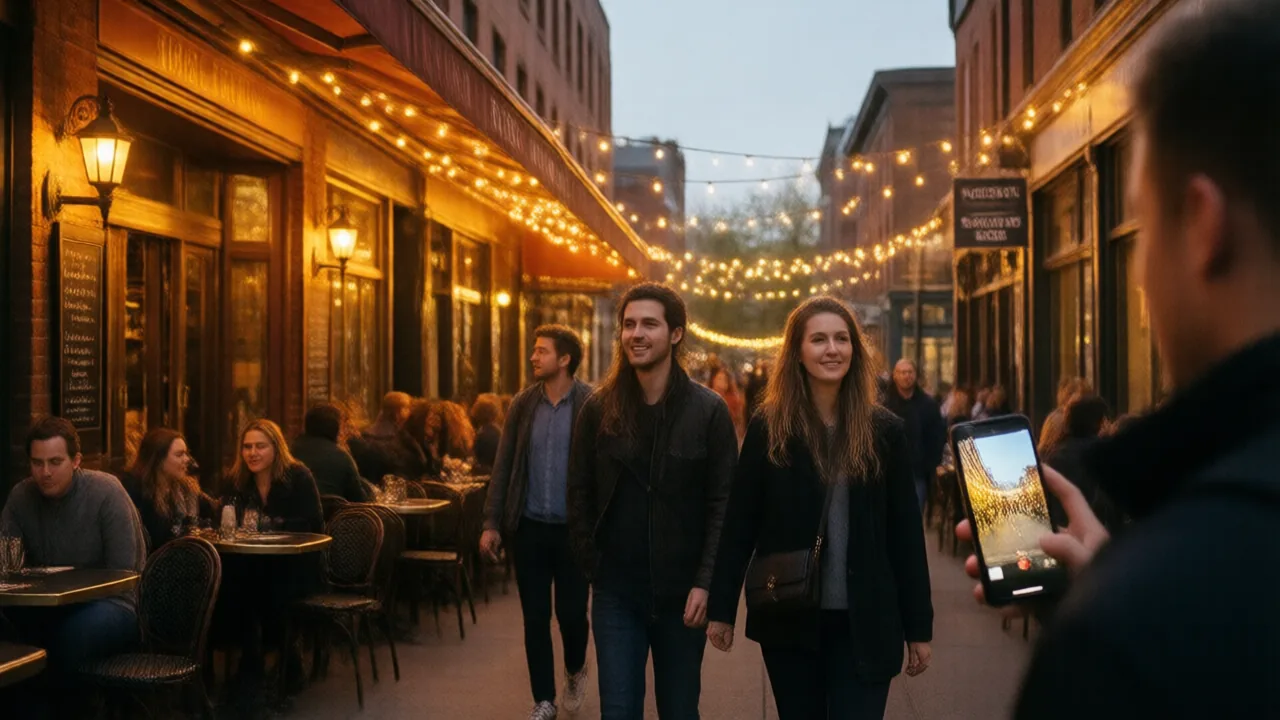
That is the whole idea. The reason it goes wrong is never the concept — it is the logistics. A crawl is four small decisions about routing, timing, budget, and booking, and getting any one of them wrong turns a great night into a group standing on a sidewalk arguing about where to go next.
This guide is the operator's version: how to plan a crawl that actually lands, from someone who has watched a lot of parties do it badly. No fluff about "vibes" — just the mechanics that keep six people fed, moving, and happy for four hours.
The Format, in Plain Terms
On a normal night out, a group picks one restaurant, sits for two hours, and eats a full meal. A crawl breaks that meal into pieces and spreads it across a walkable cluster of places. You eat the thing each restaurant does best and nothing else — the famous dumplings at the first stop, the wood-fired main at the second, the pie at the third — then you move on before the check gets big and the energy dips.
Here is the part people miss: the constraint is what makes it fun. Because you are only ordering one or two things per stop, everyone at the table gets to be a little more adventurous. The dish you would never commit a whole entrée to becomes a low-stakes two-bite gamble. A crawl is the format where the picky eater and the try-anything eater finally have the same night, and that is the real reason groups keep doing them.
The trade-off is coordination. A single dinner has one reservation, one check, one exit. A four-stop crawl has four of each, plus the walks in between, and every handoff is a chance for the group to lose ten minutes. The whole craft of planning a crawl is removing those ten-minute leaks before they happen.
The Types You'll Actually Plan
"Restaurant crawl" covers several formats that feel quite different on the night. Pick one deliberately rather than defaulting to a vague "let's go to a few places."
The Progressive Dinner
The classic. One course per stop, in order: appetizer, then a main, then dessert, sometimes a drink to open and a coffee to close. Each stop is chosen for the one course it does best. This is the most satisfying version and the easiest to explain to a group.
The Single-Dish Crawl
Pick a food and taste it across a neighborhood: a taco crawl, a dumpling crawl, a slice crawl. Stops are smaller and faster, portions tiny, and the fun is comparison. Best in a district with real density — a strip of food trucks or a taqueria row does this beautifully.
The Bites-and-Cocktails Crawl
One snack and one drink per stop, built around bars and restaurants that take the food seriously. Paces slower, skews later, and overlaps with late-night dining territory. Budget carefully — the drinks, not the plates, are what run up the tab.
The Dessert Crawl
A shorter, cheaper, family-friendly format: gelato, then a bakery, then a dessert bar. Runs 90 minutes, works with kids, and is the easiest crawl to pull off on a weeknight because dessert spots rarely need reservations.
The Food-Hall Mini-Crawl
A crawl with no walking. A food hall lets a group graze across many kitchens without leaving one table's radius — the training-wheels version, and the only one that reliably survives bad weather.
If your group is still building its instinct for what to order at each kind of place, our guide to ordering like a local travels well beyond travel — the same read-the-room instincts make you a faster, smarter orderer at every stop on a crawl.
The Four Decisions, in Order
Every good crawl is settled before anyone leaves the house. Make these four calls in this sequence and the night runs itself.
| Decision | The question to answer | Good default |
|---|---|---|
| Route | How far apart are the stops? | All within a 10–12 minute walk of each other |
| Timing | How long at each stop? | 45–60 minutes including the walk |
| Budget | Food only, or drinks too? | One drink per stop, one splurge stop |
| Booking | Which stops need a table held? | Reserve the anchor; walk into the rest |
Route first, always. A crawl lives or dies on walkability. The moment a stop requires a rideshare, you have added fifteen minutes of standing, waiting, and splitting into cars — and the group's energy leaks out the door. Cluster your stops so the whole night is one loop on foot. Downtown cores, entertainment districts, and dense dining neighborhoods are built for exactly this.
Then timing. The single most common crawl failure is starting too late. The first stop always runs long — people arrive, greet, settle, and forget they are on a clock — so the whole night slides back 30 minutes before you have finished the appetizer. Start earlier than feels necessary, and give one person the unglamorous job of calling time at each stop. That designated timekeeper is worth more than any reservation.
What It Actually Costs
The bill on a crawl is sneaky, because it arrives in four small pieces that never feel like much until you add them up on the walk home. Here is the honest math for a four-stop crawl in a typical American city in 2026.
- Food per stop: $8–$18 for one or two shared small plates. Four stops lands around $50 per person.
- Drinks per stop: $8–$16 each. This is the line that breaks budgets — four cocktails can outrun all the food combined.
- The splurge stop: one place where you spend real money on the thing you came for. Budget an extra $20–$40 here and keep the others cheap.
- Tip, four times: you tip at every stop, not once. On four checks that is real money, and it is the cost people forget to plan for.
Add it up and a comfortable four-stop crawl runs roughly $90 to $150 per person before you have been reckless. The single best cost-control move is deciding the drink rule before you leave: one drink per stop, or one drink for the whole night with water in between. Groups that skip that conversation reliably spend double what they expected, and it is almost always the bar tabs, not the kitchens, that did it.
One more saver worth knowing: a crawl timed to overlap early-evening menus and happy-hour windows can cut the drink line by a third, since your first two stops fall inside the discounted hours. Start at 5:30 and the math changes in your favor before you have even hit the anchor stop.
How the Night Actually Runs
Knowing the shape of a crawl removes most of the friction. Here is the rhythm of a well-run four-stop evening.
- Stop 1 (0:00–0:50): The opener. Light and quick — a snack and the first drink. Keep it short on purpose; this is where crawls lose their first half-hour. Settle the check before the last person finishes.
- The walk (0:50–1:00): Ten minutes on foot resets the appetite and the mood. This is the crawl's secret weapon — movement between courses is why you can eat across four places and never feel stuffed.
- Stop 2 (1:00–1:50): A substantial plate, the first place you sit properly. If any stop needs a reservation, it is usually this one or the next.
- Stop 3 (1:50–2:50): The anchor — the main event, the place you built the crawl around. Spend the most time and money here. Everything before it was warm-up.
- Stop 4 (2:50–3:40): Dessert or a nightcap. Short, sweet, and celebratory. The group is full and glowing; do not over-order.
Two timing notes worth tattooing on the plan. First, the walk between stops is a feature, not dead time — it is what keeps the format from becoming a four-hour sit. Second, appoint the timekeeper before stop one, not after stop two when you are already behind. The crawl that ends on schedule almost always had someone quietly herding it the whole way.
Booking It Without Over-Booking It
The instinct to reserve every stop is the instinct that ruins crawls. A crawl's timing is elastic — it runs late as often as early — and a table held for 8:15 that you reach at 8:55 is a table already given away, plus an awkward call. Book selectively instead.
- Reserve the anchor only. The one stop where a full party would face a real wait gets a reservation. The rest you walk into, ideally sitting at the bar where a group of six can land without a booking.
- Call ahead about walk-in policy, don't just show up. A two-minute call to confirm "can six of us grab bar seats around 7?" prevents the crawl's worst moment: the whole group stalled outside a packed room with no plan B.
- Keep one flexible stop. Build the route with a stop you can drop if you are running behind. A crawl that can shed a stop gracefully never feels rushed.
- Go earlier at the popular stop. If your anchor is the hot table in town, make it stop two at 6:45 rather than stop four at 9:30, when the wait triples.
Behind the scenes, the places that seat walk-in groups smoothly are running real waitlist and table-management systems that quote accurate waits and text you when your table is up — which is exactly why calling ahead to the busy stop pays off. For a deeper look at how kitchens and front-of-house coordinate a full room, the DafaMenu restaurant operations guides are a useful window into what is happening on the other side of the host stand.
Is a Crawl Right for Your Group?
A crawl is not the right call for every occasion. Score your night honestly:
- Is the group four to eight people who like to move? Crawls shine at that size; a party of two is just dinner, and a party of twelve cannot fit through a doorway together.
- Is the point the food or the conversation? Crawls interrupt a deep catch-up every 50 minutes. For a real talk, sit somewhere once.
- Does everyone walk comfortably and dress for the weather? The format is a walking tour with snacks. Rain or the wrong shoes end it fast.
- Is there a walkable district within reach? Without density, a crawl becomes a car-shuffle, which is the one thing that reliably kills it.
- Are people flexible about the plan changing mid-night? The best crawls improvise. Rigid planners find them stressful.
Three or more yes answers and a crawl will be the most memorable night your group has had in months. One or two, and you are better off picking one great restaurant and staying put.
Etiquette, Briefly
A crawl has a few unwritten rules that keep every stop happy to see the next group of crawlers. Do not camp — order, eat, tip, and move, because the table you are grazing at is one another party wanted for a full meal. Tip properly at every stop even on a small tab; a $6 snack still earns a real tip for the seat and the service. Keep the group's volume in check as the night warms up. And if a stop is slammed, read the room and shorten your visit rather than squeezing six people into a two-top on a Friday. Crawlers who behave well are the reason restaurants keep welcoming them.
Map your crawl from real menus
KwickMenu lets you browse actual menus from local restaurants and order directly — no delivery-app markup between you and the kitchen. Line up your stops, see exactly what each place does best, and build a crawl that is planned instead of improvised.
Browse Restaurants on KwickMenuFrequently Asked Questions
How many restaurants should a crawl include?
Three to five stops is the sweet spot for most groups. Two feels like a regular dinner with an extra drink; six or more and the last two stops arrive to a table that is full, tired, and ready to go home. A useful rule is one stop per roughly 45 to 60 minutes of the window you have. A four-hour evening comfortably fits four stops with travel time between them, which is why the classic crawl lands on four: a bite, a plate, a main, and something sweet.
How much does a restaurant crawl cost per person?
Plan on 20 to 40 dollars per stop once you add a drink, so a four-stop crawl runs roughly 90 to 150 dollars per person before tip in most American cities in 2026. The number swings on drinks more than food: two cocktails at 16 dollars each can outweigh everything you ate. To control it, decide before you leave whether drinks are one-per-stop or one-for-the-night, and pick one splurge stop rather than treating all four as special.
Do you need reservations for a restaurant crawl?
Book the two stops where a full party would otherwise wait, and walk into the rest. The trouble with reserving every stop is timing: crawls run late as often as they run early, and an 8:15 reservation you reach at 8:50 is a table given away. Reserve the anchor stop where you will spend the most time, note which stops take walk-ins at the bar, and keep one flexible slot you can skip if the group is running behind.
How long does a restaurant crawl take?
Budget about 45 to 60 minutes per stop including the walk between them, so a four-stop crawl runs three to four hours end to end. It always takes longer than the group expects, because the first stop runs long while everyone settles in. Start earlier than feels necessary, and appoint one person to call time at each stop; the crawl that ends on schedule is almost always the one with a designated timekeeper.
What is the difference between a restaurant crawl, a bar crawl, and a progressive dinner?
A bar crawl is built around drinks with food as an afterthought; a restaurant crawl inverts that, treating each stop as a course and drinks as optional. A progressive dinner is the same idea in a more structured form, usually with a fixed menu assigned to each venue and sometimes hosted across private homes. In practice a restaurant crawl is a progressive dinner you assemble yourself from a neighborhood's real menus, with the freedom to change the plan mid-night.
Written by DafaMenu Editorial Team · Published July 27, 2026