Blog → Best Restaurants for Large Groups
Best Restaurants for Large Groups: How to Find and Book Spots That Handle Big Parties in 2026
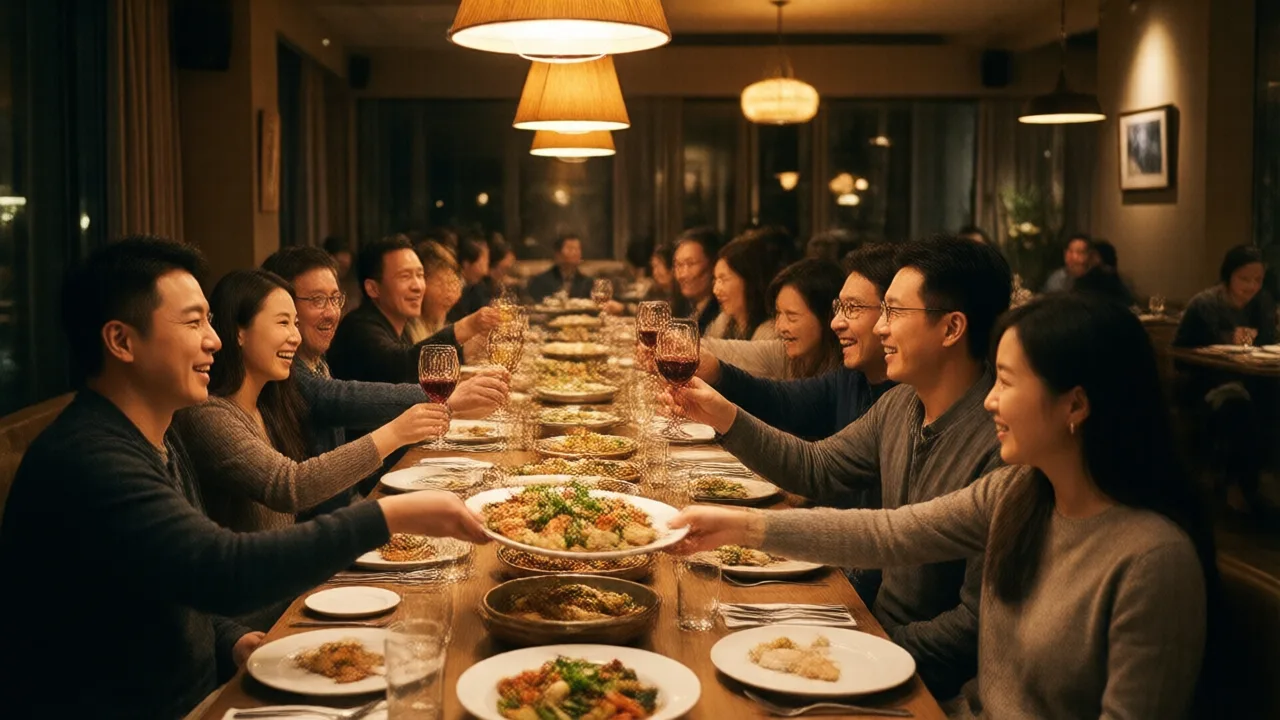
You picked the restaurant everyone loved. You made the reservation for ten. And then the night fell apart anyway — three small tables scattered across the room so half the group could not hear the other half, food that arrived twenty minutes apart, and a check-splitting standoff that turned dessert into accounting. The restaurant was fine. It just was not built for a group your size, and nobody told you the difference until it was too late.
That is the trap with large-group dining: the failure almost never shows up when you book, only when you arrive. A table for two is forgiving. A table for twelve exposes every weakness a restaurant has — its floor plan, its kitchen timing, its point-of-sale system, and its staffing. Getting it right is less about finding a "good restaurant" and more about finding a restaurant that is genuinely set up to feed a crowd.
This is the operator's guide to doing exactly that. Here is how to spot the venues that handle groups well, the questions that separate them from the ones that will seat you badly and hope for the best, and the booking mechanics that keep a party of a dozen fed, together, and out the door without a billing meltdown.
What Actually Makes a Restaurant Good for Groups
Almost any restaurant will accept a large reservation. Far fewer are built to make it good. The difference comes down to five things, and none of them show up in the star rating you were scrolling through.
The first is the table itself. A great group restaurant seats you at one long table or in a dedicated room, so the party stays one conversation instead of splintering into cliques. The moment a host offers to "push a few tables together" across a busy dining room, you are looking at a compromise — guests on the ends will spend the night shouting past the middle.
The second is kitchen coordination. Sending twelve entrées out hot and at the same time is a genuinely hard operational problem, and restaurants that do it well have either a limited group menu or a kitchen used to firing large tables. The ones that do it badly send your food in three waves, so a third of the table is finished before the rest is served.
The remaining three are quieter but just as important: staff assigned to your table rather than borrowed between rushes, a point-of-sale system that can split a check without a fifteen-minute delay, and a noise level that lets people actually talk. Here is the quick version to carry with you.
| Feature | Why it matters for groups | Green flag |
|---|---|---|
| Seating | Keeps the party one conversation | One long table or a private room |
| Menu | Gets everyone's food out together | A group or set menu for 8+ |
| Staffing | Attentive service under load | A dedicated server or two |
| Payment | Fast, painless bill at the end | Splits checks or even-divides easily |
| Acoustics | People can hear each other | Soft surfaces, a room or alcove |
Notice what is not on that list: the food being the best in town. A merely good restaurant that nails all five of these will give your group a better night than a great one that fails three of them. For a crowd, logistics is the flavor.
The Venue Types That Do It Best
Some categories of restaurant are structurally better at groups than others, because their whole format is built around feeding a lot of people the same food at the same time. Steer toward these when the headcount climbs.
Family-Style and Shared-Plate Restaurants
The single most group-friendly format there is. Food arrives in the middle and everyone serves themselves, which sidesteps the "twelve separate entrées" timing problem entirely. Ordering is faster, the table feels communal, and picky and adventurous eaters both get what they want. If you are choosing blind, a family-style spot is the safest bet.
Restaurants With a Private or Semi-Private Room
A separate room solves seating, noise, and service in one move. Most come with a set menu and a food-and-beverage minimum rather than a room-rental fee, so read that fine print. Worth it for any occasion where the group needs to hear a toast or a speech.
Interactive and Cook-at-Table Concepts
The activity is the entertainment, which keeps a big table engaged without anyone carrying the conversation. Everyone eats continuously and at their own pace, so the kitchen-timing problem disappears. Ideal for celebrations and mixed groups that do not know each other well.
Breweries, Beer Halls, and Gastropubs
Long communal tables are already the default, the vibe absorbs a loud, happy crowd, and the price point suits groups splitting a bill many ways. The trade-off is that food can be slower and simpler, so set expectations accordingly. Great for casual get-togethers, less so for a milestone dinner.
The pattern across all four is the same: they were designed for volume, so a group does not knock them off balance. When you are choosing where to take a crowd, that structural fit matters more than any single dish. If the occasion is a birthday or a milestone, our guide to family-friendly restaurants covers the same instincts for groups that include kids.
The Booking Questions That Save the Night
Here is the move that separates a smooth group dinner from a stressful one: you call, and you ask five specific questions before you commit. A restaurant's answers tell you instantly whether they are set up for you or just willing to take the reservation. Behind the scenes, the venues that handle big parties gracefully are running real waitlist and table-management systems that hold your booking, track the deposit, and coordinate the kitchen — which is exactly why a two-minute call surfaces so much.
- "How will you seat a party of [X]?" You want to hear "one long table" or "our private room," not "we'll push some tables together." This one question predicts more of your night than any other.
- "Is there a deposit, and is it refundable?" Deposits are normal for large groups — often $10 to $25 per head — but you need to know the amount and the cancellation window before you hand over a card.
- "Do you add automatic gratuity, and at what party size?" Almost all do for six or eight and up, usually 18 to 20 percent. Knowing this prevents the accidental double-tip at the end.
- "Can we order off the full menu, or is there a group menu?" Either answer is fine — a set menu is often better for big groups — but you want to know so you can tell your guests what to expect.
- "Can you split the check, and how many ways?" Some kitchens split infinitely; others cap it or refuse. Settle this now so the end of the meal is not a math problem.
A restaurant that answers all five crisply is one that feeds groups all the time. A restaurant that hesitates or waves the questions away is telling you something too — believe them. If your first-choice spot is fully committed, the tactics in our guide to getting a table at a booked-solid restaurant apply double for large parties, since group cancellations open up more often than you would think.
How to Book It, Step by Step
Once you have found the right restaurant, the booking itself has a rhythm. Follow it in order and nothing falls through the cracks.
- Lock the headcount range early. Give the restaurant a realistic number and tell them it may move by one or two. "Ten to twelve" is far more useful to a kitchen than a vague "around a dozen."
- Book two to four weeks out — more for a private room. Large tables and rooms are limited, and holidays, graduations, and December compress the calendar fast. Earlier is always cheaper in stress.
- Confirm the deposit and menu in writing. Ask for a confirmation email or text with the party size, time, deposit, and any set menu. A screenshot has settled many a front-desk misunderstanding.
- Collect dietary needs before the day. Poll your group for allergies and restrictions and pass them to the restaurant in one message, not as ten surprises at the table.
- Reconfirm 48 hours ahead. A quick call the day before locks your table, updates the final count, and reminds the restaurant to prep for you. This is the single most-skipped step and the one that prevents the most disasters.
None of this takes long, and all of it moves the coordination off the dinner itself. The whole goal is that when your group walks in, the only thing left to do is sit down and eat.
Handling the Bill Without Killing the Mood
The end of a group dinner is where good nights go to die. Twelve people, one check, and a table full of people doing mental arithmetic is the slowest, most awkward stretch of any gathering — and it is entirely avoidable with one decision made up front.
Pick your method before anyone orders, and tell the server when you sit down so the point-of-sale system is set up for it. There are only three that reliably work at scale:
- One payer, settle by app. The fastest option by far: one person's card covers the whole check and everyone sends their share by payment app before the plates are cleared. Best when the group trusts each other and the math is easy.
- Even split across cards. Total divided equally, each card charged the same. Fair when everyone ate and drank roughly the same, awkward when one person had water and salad while another ordered the ribeye and two cocktails.
- Itemized separate checks, arranged early. The most precise and the slowest to set up — it only works if you tell the server before the meal so they can track each seat. Never spring "can we get separate checks?" at the end of a twenty-person dinner.
Remember the auto-gratuity when you settle: on parties of six or eight and up it is usually already on the check, so leave the extra tip line blank unless the service earned more. Our full breakdown of splitting the bill for group dining walks through the apps and etiquette in detail. Handle the money the way the pros do — decided in advance, invisible at the end.
A Quick Pre-Book Checklist
Before you send the group text confirming the plan, run down this list. If you can check every box, your large-group dinner is already most of the way to a good one.
- The restaurant seats your party at one table or in a room, not scattered across the floor.
- You know the deposit amount and the refund window.
- You know whether auto-gratuity applies and at what percentage.
- You have confirmed full menu versus group menu and told your guests.
- You have a bill-splitting method chosen and communicated to the server.
- You have collected dietary needs and passed them along in one message.
- You have a reconfirmation call scheduled for 48 hours before.
Seven boxes, five minutes of phone calls, and one clear-headed decision about the check. That is the entire difference between a group dinner people remember fondly and one they quietly agree never to repeat. For deeper coordination on the restaurant's side of the equation, the DafaMenu restaurant operations guides are a useful window into how the best venues actually orchestrate a full room.
See the real menu before you book for a crowd
KwickMenu lets you browse actual menus from local restaurants and order directly — no delivery-app markup between you and the kitchen. Check whether a spot has the shareable, family-style dishes a big group needs, then reach out to book with confidence.
Browse Restaurants on KwickMenuFrequently Asked Questions
What size group counts as a large party at a restaurant?
Most restaurants treat eight guests as the threshold where a booking becomes a large party, because eight is where a single server, a standard table, and the kitchen's ticket timing all start to strain. Below eight you are usually a normal reservation; at eight or more you often trigger a different set of rules: a required deposit, an automatic gratuity, a limited or set menu, and a separate person who handles the booking. A few high-volume spots set the line at six, and banquet-focused venues may not blink until twelve, so the honest answer is to ask each restaurant directly rather than assume.
Do restaurants charge an automatic gratuity for large groups?
Yes, most do for parties of six or eight and up, typically 18 to 20 percent added to the check automatically. It is legal and standard, and it protects the server who is turning fewer tables to handle your group. The thing to watch is a double-tip: the auto-gratuity is already on the bill, so the tip line below it should usually be left blank unless you want to add more for exceptional service. Always read the printed check before you sign, because a party of ten splitting the bill can easily tip twice without noticing.
How far in advance should I book a restaurant for a large group?
Book two to four weeks ahead for a group of eight to twelve on a normal weekend, and four to eight weeks for anything larger or for a private room. December, graduation season, and any Saturday near a holiday compress that window fast, so treat those as six-plus weeks out. The reason is not just table space; large groups usually need a manager to confirm a menu, take a deposit, and block staff, and that coordination cannot happen at the last minute the way a table for two can.
Should a large group order off the regular menu or a set menu?
For groups above roughly twelve, a set or limited menu is almost always the better experience even when the restaurant offers a choice. A kitchen firing twenty individual orders at once will either slow to a crawl or send food out unevenly, so a curated menu of three or four options per course keeps everyone eating at the same time. For smaller groups of eight to ten, the full menu usually works fine as long as the restaurant is set up for it. Ask the restaurant which they recommend for your headcount and trust their answer.
How do you split the bill for a large group without a headache?
Decide the method before anyone orders, not when the check lands. The three that actually work are: one person pays and everyone settles up by app afterward, an even split across all cards, or itemized separate checks arranged with the server in advance. Even splits and single-payer are fastest; itemized checks work but must be requested early so the point-of-sale system can track seats. Whatever you choose, tell the server when you sit down so they can set it up, because a large table trying to divide one bill at the end is the slowest moment of any group dinner.
Written by DafaMenu Editorial Team · Published July 28, 2026