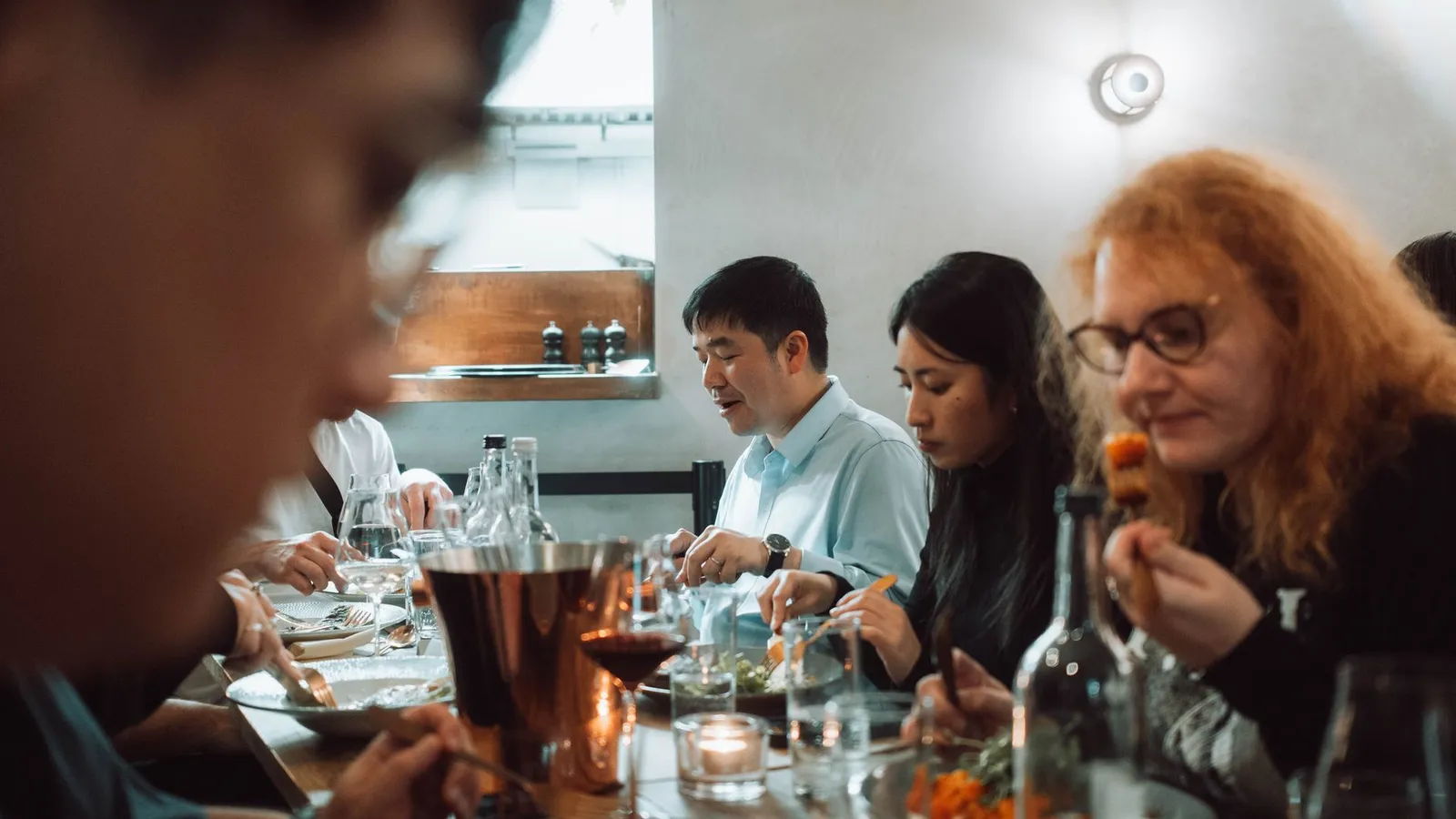
Dining out habits 2026: what OpenTable's new report shows
What the report says
On September 29, 2026, OpenTable published its first U.S. Restaurant Impact Report. It draws on two kinds of evidence: reservation data from active U.S. restaurants on OpenTable, comparing July 2025 through June 2026 with the year before, and online surveys by Ripple Research of 1,501 U.S. consumers who dine out and 355 restaurant workers, run from July 28 to August 4, 2026.
The headline numbers for diners:
- Dining at OpenTable restaurants is up 11% year over year.
- Average spend is $60 per person, up 3%.
- 60% of diners spend money at nearby businesses before or after a meal, and the report puts that extra spending at $138 on average. The figure is $171 for Gen Z and $158 for Millennials.
- Nearly one in four diners call a local restaurant their "third place," meaning a regular spot outside home and work. Among Gen Z it is 39%.
- 43% say restaurants are where they reconnect with friends and family, 32% say eating out is part of their weekly routine, and 31% call restaurants a source of comfort.
- 28% say they missed a reservation without cancelling at least once in the past year.
Restaurant staff were asked about the other side of the table. 81% of workers say they greet regulars by name and 73% say they know regulars' usual orders. Operators estimate that a no-show table for two costs about $80. Workers say no-shows mean turning away other guests (56%), paying staff for covers that never arrive (51%) and wasting food or stock (49%).
How to read the 11% figure
The growth number counts diners seated through OpenTable reservations, so it describes that platform, not every restaurant in the country. Other measures look softer. The National Restaurant Association's 2026 outlook, published in February, forecasts $1.55 trillion in industry sales but only 1.3% real, inflation-adjusted growth. It also notes that 60% of operators reported lower traffic the year before. The same outlook found that 61% of consumers still consider restaurants essential to their lifestyle.
Put together, the data shows people still eating out and treating restaurants as part of their social life, while spending more carefully. That matters most in the next eight weeks, when holiday parties, family dinners and New Year's Eve fill the same tables.
A worked example: what one skipped booking costs
The report's figures let you put a rough number on everyday choices. These are estimates built only from the report's averages, not from any one restaurant's books.
The "backup table" habit. Say a group of friends is planning a Friday dinner in December. To be safe, three people each book a table for two at different restaurants. The group picks one and nobody cancels the other two. Using the operators' $80 estimate per no-show table for two, the two empty tables cost those restaurants about 2 x $80 = $160 for the night. The report gives a figure only for a table for two, so a bigger empty booking probably costs more, but the report does not put a number on it.
How common it is. 28% of diners in the 1,501-person survey said they had missed a reservation without cancelling at least once in the past year. That is more than one in four.
What showing up is worth. At the report's average of $60 per person, a table of four comes to about 4 x $60 = $240 at the restaurant. If the group then spends at nearby businesses before or after the meal, as 60% of diners say they do, the report puts that extra spending at $138 on average (it does not say whether that is per person or per group). So a single kept reservation can mean roughly $240 for the restaurant and more for the block around it. A missed one costs the restaurant money and also costs the neighbors the spending that would have followed.
Holiday reservations: keep, release or call
Use this table when plans change during the holiday season.
| Your situation | What to do | Why |
|---|---|---|
| You booked more than one place for the same night | Cancel all but one as soon as the group decides | Each table you release early can still be booked by someone else |
| Your party is shrinking (for example, six becomes four) | Update the party size or call the restaurant | The kitchen preps and staffs for the number on the booking |
| You will be 15 to 30 minutes late | Call the restaurant directly | Many places hold a table if they know you are coming; silence looks like a no-show |
| Someone is sick on the day | Cancel or call right away, even if it is an hour before | A late cancellation still beats an empty table nobody knew about |
| You are unsure whether you will go | Do not book yet; check the walk-in or waitlist option closer to the date | Holiday weeks fill fast, and holding a "maybe" table keeps it from someone else |
| The booking needed a card or deposit | Read the cancellation window in your confirmation before the day | Policies differ by restaurant and platform, and fees often apply only after a cutoff |
A five-minute pre-holiday checklist
- List every booking you hold between now and early January, including ones made through different apps, and make sure each has a real plan behind it.
- Put the cancellation cutoff in your calendar for each one. Check each reservation's own terms, because rules vary.
- Name one person to manage the group booking and keep the party size up to date.
- Save the restaurant's phone number, not just the app link, so you can call quickly if you are running late.
- Plan the before and after. If the night includes shopping, drinks or a show nearby, choose places within walking distance. That is the local spending the report describes.
The regulars effect
The report's staff numbers point to an easy win for diners: be a regular. When 81% of workers say they greet regulars by name and 73% know their usual orders, a restaurant you return to often already knows you, and that familiarity may help on a busy night, whether that means fitting in an extra chair or making a familiar dish. Picking one or two local spots for the season, booking ahead and turning up when you said you would is how a restaurant becomes the "third place" nearly a quarter of diners say they already have.
For more on getting into busy places, see our guide to getting a table at a fully booked restaurant, and for big holiday gatherings, restaurants for large groups and splitting the bill.
Bottom line
OpenTable's data shows Americans still treating restaurants as part of their social lives, and spending about $60 a head to do it. The costly habit it highlights is booking tables people do not use. This holiday season, keep one reservation per night, update your party size and cancel early. It costs you nothing and leaves the table open for someone else.
Frequently asked questions
How much does a restaurant no-show cost?
In OpenTable's 2026 U.S. Restaurant Impact Report, operators estimate that a no-show table for two costs about $80 on average. Workers said no-shows lead to turning away other guests, paying staff anyway and wasting food.
How many diners skip reservations without cancelling?
28% of the 1,501 U.S. diners surveyed for the report said they missed a reservation without cancelling at least once in the past year.
How much do people spend when they eat out?
OpenTable's reservation data puts the average at $60 per person, up 3% year over year. The report also says 60% of diners spend money at nearby businesses before or after a meal, $138 on average.
Is dining out really up 11% in 2026?
The 11% figure counts diners seated through OpenTable reservations from July 2025 to June 2026, so it describes that platform rather than all restaurants. The National Restaurant Association's 2026 outlook expects more modest real sales growth of 1.3%.
What is a restaurant 'third place'?
It means a regular spot outside home and work where people go to connect. Nearly one in four U.S. diners in OpenTable's survey called a local restaurant their third place, and among Gen Z it was 39%.
Sources
- OpenTable's Inaugural U.S. Restaurant Impact Report Reveals Why Restaurants Matter More Than Ever, OpenTable via PR Newswire, 2026-09-29
- Restaurant traffic has a positive impact on surrounding businesses, OpenTable reports, Nation's Restaurant News, 2026-10-22
- Report: Sales to hit $1.55T in 2026 despite challenging business environment, National Restaurant Association, 2026-02-13
Checked November 3, 2026. Photo: Viridiana Rivera / Pexels.
More from this site
Independent guides, updated November 2026. See our full article library.