Blog → Vegan and Plant-Based Dining Out
Vegan and Plant-Based Dining Out: A Practical Guide
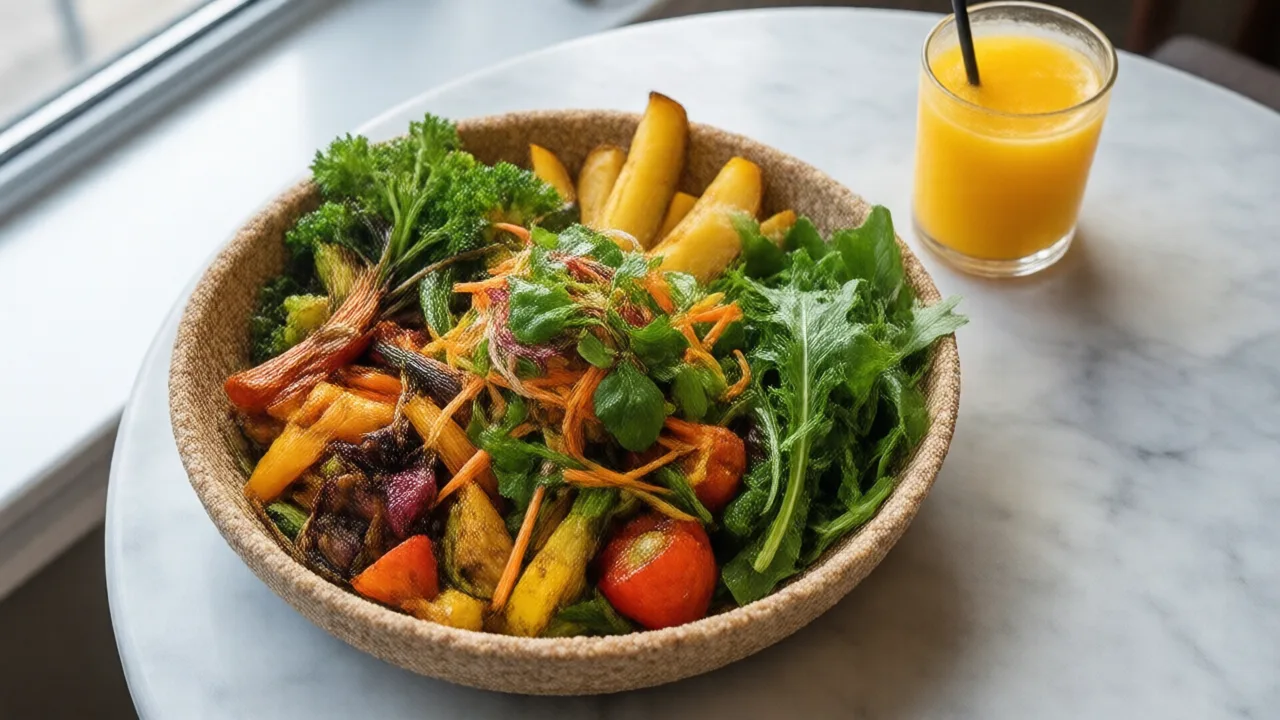
"So — what can you eat?"
Every vegan has fielded that question across a table, usually from someone kind, usually while a server hovers, usually about ninety seconds after everyone else has ordered. And the honest answer — "quite a lot, actually" — never fits in the moment, so you say "I'll figure something out" and end up with steamed broccoli and a bread plate at $19.
The bad version of this evening is not really about the food. It is about being the reason the table slowed down. You over-explain, the server tries to help and guesses wrong, someone suggests you "just pick things off," and by the time the plates land you have spent more social capital than the meal was worth. Do that four times and you start declining invitations, which is how a dietary choice quietly turns into a smaller life.
It does not have to run that way, and the fix is unglamorous: pick restaurants whose tradition already agrees with you, learn the six ingredients that hide, and replace the explanation with a single sentence. Below is each of those three in usable form. If you are still working out the terminology — vegan versus plant-based versus vegetarian, and what each one rules out — start with our primer on what vegan dining out actually means and come back here for the tactics.
Start With Cuisine, Not With Substitution
The most common mistake is choosing a restaurant and then negotiating. The better move is choosing a restaurant where nothing needs negotiating — where plant-based cooking is the tradition rather than a concession.
| Cuisine | Reliability | Order this | Ask about |
|---|---|---|---|
| Ethiopian | Excellent | Vegetarian combination platter, misir wat, gomen | Nothing, on fasting days |
| South Indian | Excellent | Masala dosa, sambar, idli, vegetable thali | Ghee on the dosa |
| Lebanese / Levantine | Excellent | Mezze spread: hummus, baba ghanoush, tabbouleh, falafel | Yogurt in the sauce |
| Thai | Very good | Vegetable curries, pad pak, som tam | Fish sauce, shrimp paste, oyster sauce |
| Vietnamese | Very good | Tofu banh mi, vegetarian pho, fresh rolls | Broth base, fish sauce in dipping sauce |
| Mexican | Good | Bean and vegetable tacos, nopales, guacamole | Lard in beans and tortillas, cheese by default |
| Italian | Good | Pasta al pomodoro, marinara, olive-oil vegetables | Egg pasta, butter finish, parmesan in the sauce |
| Japanese | Mixed | Vegetable maki, agedashi tofu, edamame | Dashi — it is in almost everything |
| Steakhouse | Poor | Call ahead or choose elsewhere | Nearly every side is butter-finished |
Notice the pattern: the cuisines at the top are ones with long religious or agricultural traditions of eating without animal products. Those kitchens are not accommodating you. They are just cooking. If you are still mapping out which of these you actually enjoy, our guide to the cuisines worth trying first is a good place to widen the rotation before you need it under pressure.
The Six Ingredients That Hide
Here is where most accidental slips happen — not in obvious dishes, but in the finishing steps that never make it onto a menu description.
Chicken and beef stock
The single most common surprise. Vegetable soups are frequently built on chicken stock, and rice is often cooked in it. It is invisible, it is standard practice, and it is never listed. Always ask what the rice and the soup base are made with.
Fish sauce, oyster sauce, shrimp paste
Present in curry pastes, stir-fry sauces and dipping sauces. Many kitchens keep a vegan curry paste specifically for this request — but only if you ask. "No fish sauce and no oyster sauce" is a phrase every Thai restaurant understands.
Butter and cream finishes
A pasta described as "tomato, basil, garlic" is often finished with a knob of butter for gloss. Grilled vegetables are frequently basted. Ask for the dish finished in olive oil instead; most kitchens can do it without any trouble.
Anchovy
Worcestershire sauce contains anchovy and turns up in marinades, veggie burgers and bloody marys. Caesar dressing is anchovy-based by definition even when nobody mentions it.
Lard and animal fat
Refried beans made with lard are traditional in many kitchens. Ask, and ask separately about the tortillas — flour tortillas sometimes contain lard where corn tortillas usually do not. Fries cooked in shared beef tallow are a separate question worth asking at burger restaurants.
Honey, gelatin, rennet, casein
Honey appears in vinaigrettes and glazes. Gelatin is in mousses, marshmallow and some sorbets. Most aged parmesan uses animal rennet. And a fair number of "non-dairy" coffee creamers contain casein, a milk protein.
If your reasons for avoiding these ingredients are medical rather than ethical — or both — the stakes of a wrong answer change entirely, and the approach in our guide to dining out with food allergies is the more careful protocol to follow. Restaurants that handle this well have a documented process behind the kitchen door; the operator's view of it is set out in this guide to how restaurants manage allergens and ingredient tracking.
The Sentence That Replaces the Explanation
Stop listing exclusions. Lead with a single clear statement and one open question, delivered to the server at the moment they arrive rather than after everyone else has ordered.
Fourteen words. It does three things at once: it is unambiguous, it gives the server permission to consult the kitchen, and it frames the request as a recommendation rather than a problem. In practice it produces a far better plate than reciting a list, because you have invited the cook to show off instead of asking them to subtract.
Two follow-ups cover almost everything else:
And when a server confidently says "the pasta is vegetarian" — a genuinely common and genuinely well-meaning answer — the useful reply is not a correction but a question: "Does it have any cheese or cream in it?" You get the right information without anyone losing face.
Reading a Menu Before You Sit Down
Two minutes with the menu in advance changes the whole evening. Most restaurants now publish a current menu online or behind a table QR code, which is genuinely useful for exactly this — one of the underrated upsides covered in our piece on what digital and QR menus actually change for diners.
What to look for, in order:
- A labeled vegan item. A "V" or "VG" marker means the kitchen has thought about this before you arrived. That is the strongest possible signal.
- The vegetable sides section. Three or more genuinely vegetable-forward sides means you can build a plate even if the entrees do not work.
- The appetizer list. Two vegan-adaptable appetizers plus a side is usually a better dinner than a compromised entree, and often cheaper.
- Base ingredients across dishes. If the kitchen already keeps chickpeas, lentils, mushrooms or tofu for other dishes, it can build you something. If the pantry is entirely animal protein plus potatoes, it cannot.
- A grain or legume that appears twice. That is prep the kitchen has ready, which is what makes an off-menu dish possible on a busy Friday.
Restaurants are increasingly motivated to do this well, incidentally — plant-based dishes carry attractive food costs and pull in mixed groups where one person's restriction decides where six people eat. The economics are laid out in this look at why plant-based dishes earn their place on a menu. Knowing that a good vegan option is in the restaurant's interest makes asking for one feel a lot less like imposing.
Situations That Need a Plan
- Group dinners you did not choose. Call the restaurant at 3 p.m. the day before. Say you are joining a party of eight and ask what they can prepare. A named heads-up almost always produces a real dish rather than an improvised one.
- Tasting menus and prix fixe. Give 48 hours minimum. Many kitchens run a full vegan tasting at the same price, but the prep starts days before service.
- Weddings and catered events. Reply to the meal-choice request even if the form has no vegan box; email the host or venue directly. Catering counts are locked two to three weeks out.
- Airports and highway stops. Bean burritos without cheese, oatmeal made with water, hummus and pita, and black coffee are the reliable four. Carrying nuts removes the whole problem.
- Business meals. Order first, briefly and without commentary. It sets the tone that this is unremarkable, which it is.
One habit worth building regardless of diet: paying attention to what actually leaves you satisfied rather than merely fed. Vegan restaurant meals skew heavily toward refined carbohydrates when they are assembled defensively — a bread plate, fries and a side salad is technically compliant and nutritionally thin. The framework in our guide to eating well at restaurants applies directly: aim for a protein source, a whole grain and something green in every meal you order out.
When to Just Leave
Rare, but worth naming. If a kitchen cannot tell you what is in a dish, that is not a vegan problem — it is an information problem, and it applies equally to someone with an allergy. If the answer to every question is a confident guess, order something you can verify by looking at it, or eat elsewhere. Good restaurants are never annoyed by the question. That reaction is itself the most reliable review you will get all night.
Check the menu before you commit
KwickMenu lets you read real menus from local restaurants and order directly with the kitchen — so you can see whether the vegan options are real before you walk in.
Browse Menus on KwickMenuFrequently Asked Questions
Which cuisines are most reliably vegan-friendly?
Ethiopian, South Indian, Lebanese and Levantine, Thai and Vietnamese are the strongest bets because plant-based dishes are part of the core tradition rather than a substitution. Ethiopian fasting platters and South Indian dosa and sambar are vegan by default. Thai and Vietnamese need one question about fish sauce and shrimp paste. Italian is workable through pasta with a tomato or oil base, provided the pasta is eggless, which most dried pasta is.
What hidden animal ingredients catch vegans out most often?
Chicken stock in rice, soup and risotto is the most frequent surprise, followed by fish sauce in Southeast Asian dishes, anchovy in Caesar dressing and Worcestershire sauce, lard in refried beans and some tortillas, butter finishing on grilled vegetables and pasta, honey in dressings and glazes, and gelatin in desserts. Parmesan and many aged cheeses use animal rennet. Asking what the dish is finished with catches most of these in one question.
How do I ask about vegan options without making it awkward?
Lead with what you can eat rather than what you cannot, and ask one open question: I eat no meat, dairy, eggs or fish. What would the kitchen recommend? That single sentence gives the server everything they need and invites them to bring the kitchen into it. Framing it as a recommendation rather than a restriction consistently produces a better plate than reciting a list of exclusions.
Should I call ahead or just show up?
Call ahead for tasting menus, prix-fixe restaurants, group dinners of six or more, and any restaurant where you are not the one choosing. A 3 p.m. call gives the kitchen time to order or prep something, and many chefs will build a genuinely good dish given a day of notice. For casual restaurants and cuisines that are vegan-friendly by tradition, showing up is fine. Give at least 48 hours for a multi-course menu.
Is a plant-based burger a safe vegan order?
The patty usually is; the rest of the build often is not. The most common problems are a brioche or milk-wash bun, a mayonnaise-based sauce, cheese added by default, and a shared flat-top griddle with beef. Ask for the bun to be checked, request the sauce on the side or swapped, confirm no cheese, and if cross-contact matters to you ask whether the patty can be cooked on a clean surface or in a separate pan.
Written by DafaMenu Editorial Team · Published July 26, 2026